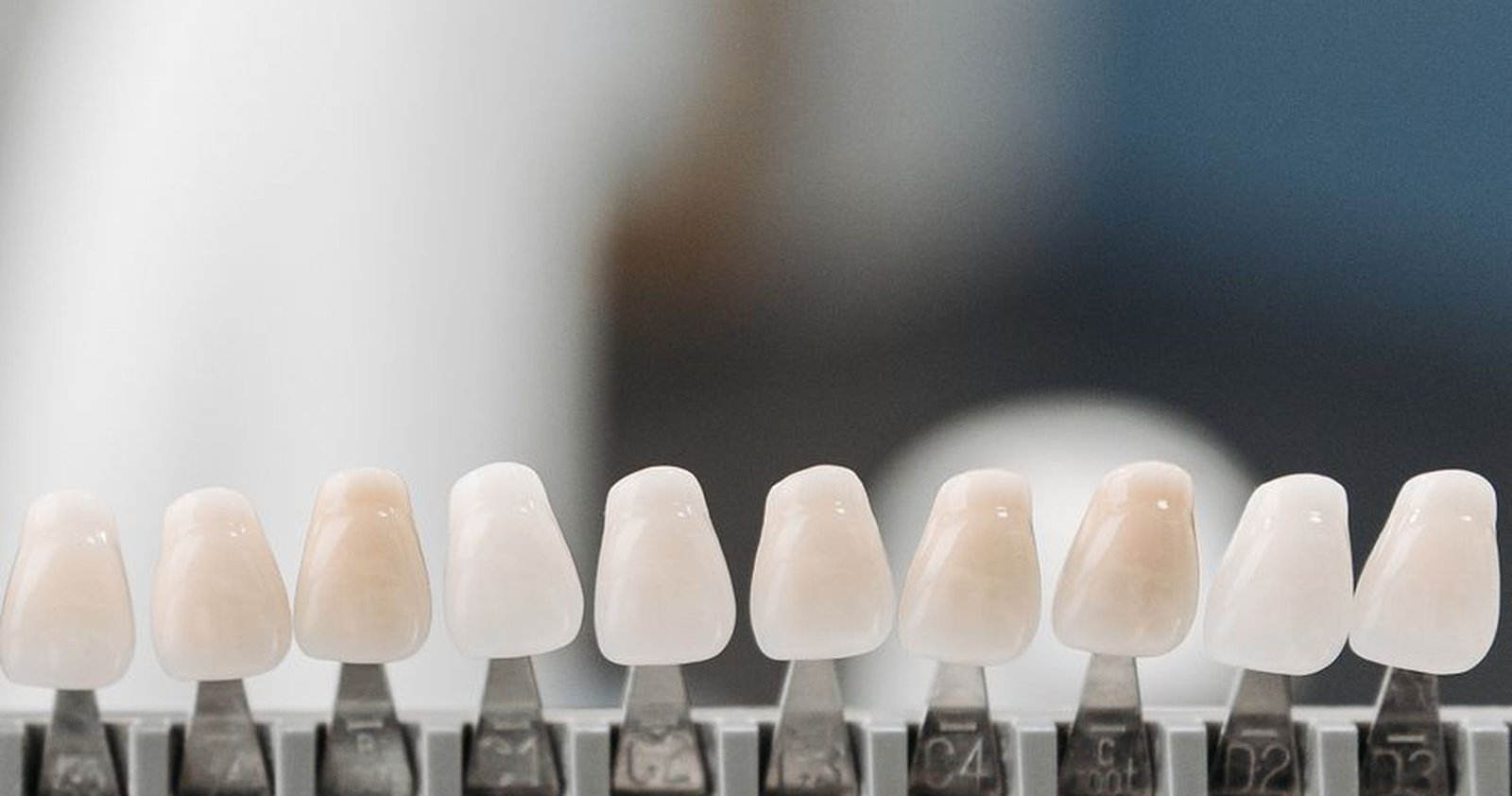
Teeth whitening: what actually works, and what is just marketing
Most patients begin whitening at the pharmacy shelf: a toothpaste promising two shades in a week, or a strip worn overnight. The question worth answering before buying anything is a different one: where does the colour actually live?
Where the colour lives
Two layers matter here: the enamel on the outside, which is very nearly translucent, and the dentine beneath it, which is what actually carries the colour. The stains we see come in two kinds — extrinsic ones sitting on the enamel from coffee, tea and smoking, and intrinsic ones that have worked into the dentine with age or because of certain medications.
That split explains everything. Toothpaste is abrasive and removes extrinsic stain only, which is why it returns a tooth to its own original shade and never goes beyond it. An oxidising gel reaches the dentine and breaks the pigment molecules themselves — and only there does the shade genuinely move.
The practical rule: if a product promises to "remove stains" it is cleaning. If it promises to "lighten the shade", it has to contain peroxide.
Three options, three results
- Whitening toothpaste: clears surface stain within a fortnight and does not change the underlying shade. It is for maintaining a result, not producing one.
- Home trays: a low-concentration gel worn an hour a day for two weeks. Two to four shades, and the least likely to cause sensitivity.
- An in-clinic session: a higher concentration with an activating light and the gums fully isolated. Four to eight shades in forty-five minutes.
What about sensitivity?
Post-whitening sensitivity is common and temporary; it comes from the dentinal tubules being briefly permeable. We treat it with fluoride gel straight after the session and potassium nitrate toothpaste for a week. In most patients it is gone within forty-eight hours.
What does not whiten
Fillings, crowns and veneers do not respond to whitening at all. Which is why the order of work matters: whiten first, wait two weeks for the shade to settle, then replace the front fillings to match. Doing it the other way round leaves a filling permanently lighter or darker than its neighbours.
And finally: whitening is a cosmetic procedure performed on a healthy mouth. If there is decay or active gum inflammation, the gel will reach places it should not. The examination beforehand is not an upsell — it is a condition of doing the procedure safely.